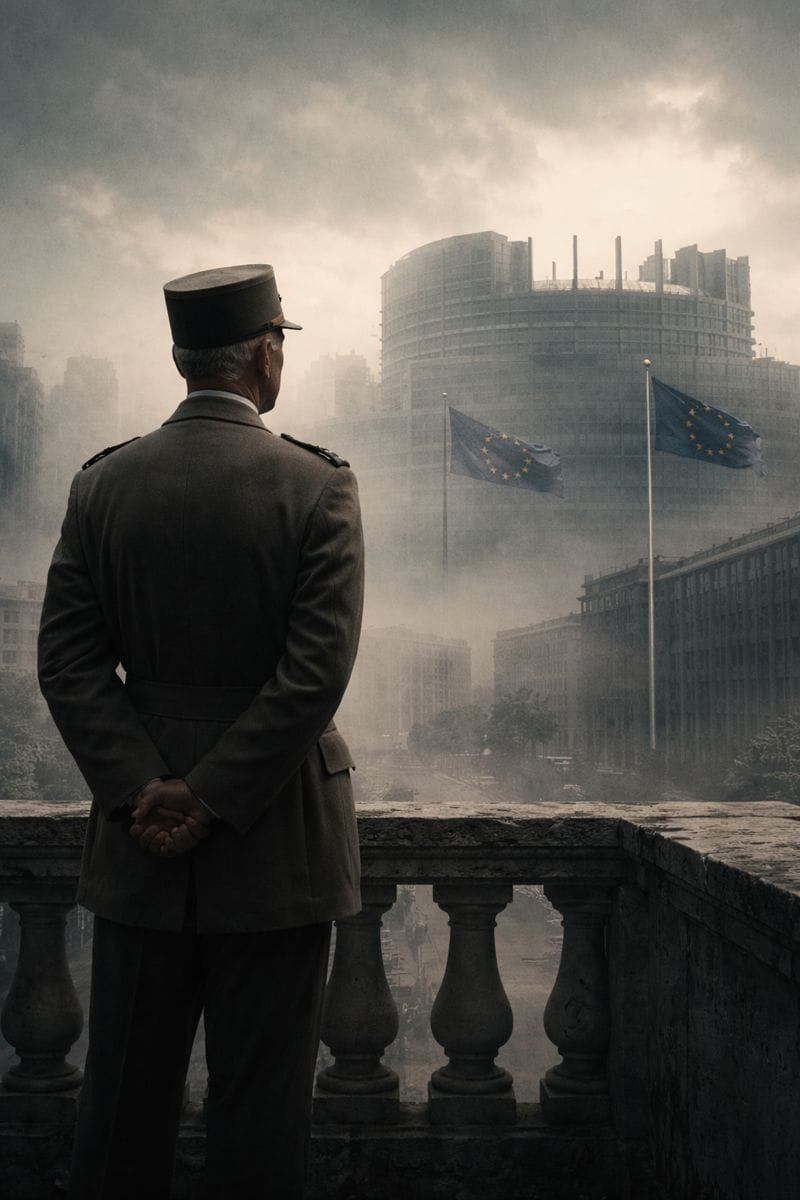

Historical Foundation
Charles de Gaulle, the prominent leader of post-World War II France, was not only a military figure but also a visionary political thinker who profoundly influenced the trajectory of Europe. His political philosophy was shaped by his experiences during the war and the subsequent need for a resilient European identity. De Gaulle’s advocacy for a ‘Europe of Nations’ stood in stark contrast to the burgeoning idea of a centralized European superstate. He believed that true strength and unity could only emerge by prioritizing the sovereignty of individual nation-states over a bureaucratic empire dominated by institutions like the European Economic Community (EEC).
De Gaulle’s opposition to supranational federalism stemmed from his conviction that it threatened the fundamental principles of national identity and self-determination. He was particularly critical of the decision-making processes orchestrated by unelected bureaucrats in Brussels, arguing that these entities lacked accountability and did not reflect the will of the people. This perspective led him to veto the United Kingdom’s entry into the EEC, based on his concerns that British membership would shift the focus toward a more centralized authority, potentially undermining the integrity of European nations.
Moreover, de Gaulle was an unwavering proponent of maintaining national independence across various domains, including military, monetary, and political spheres. His belief that nations must retain control over their destinies was evident in his call for a Europe that respects national integrity and sovereignty. This vision not only shaped France’s foreign policy but also inspired a significant debate about the future of Europe, highlighting the tension between the desire for unity and the need for independence that persists in European politics today. Through his actions and philosophy, de Gaulle established a historical foundation for discussions surrounding the balance between nation-states and supranational governance, a theme that remains relevant in contemporary Europe.
The Turning Point
The vision articulated by Charles de Gaulle underscored the importance of sovereign nations within the European framework. However, the trajectory of European integration began to shift significantly following key treaties that fostered a collective European identity, often at the expense of individual state sovereignty. The Maastricht Treaty, enacted in 1993, marked a pivotal moment in this evolution by establishing the European Union and introducing the concept of European citizenship. This treaty not only bolstered economic cooperation but also laid the groundwork for deeper political integration, which de Gaulle had criticized.
Further developments were sealed with the Treaty of Lisbon in 2007, which aimed to streamline decision-making processes within the EU and increase its global presence. Noteworthy changes included the expansion of qualified majority voting, diminishing the individual veto power of member states, and enhancing the influence of the European Parliament. These agreements were heralded as steps toward greater unity; however, they simultaneously catalyzed the growth of the European Commission, steering the Union towards what some critics describe as a bureaucratic empire. This shift raises pertinent questions about democratic accountability, as the decisions made by technocratic bodies often move beyond the reach of democratic oversight.
As the EU evolved, the gradual erosion of nation-state authority become increasingly evident. Sovereign nations found themselves constrained by overarching EU regulations and directives, with their political sovereignty increasingly undermined. In de Gaulle’s perspective, this development risked replacing national interests with bureaucratic ambitions. The burgeoning influence of technocratic governance fundamentally altered the landscape of European politics, creating tensions between the goals of integration and the principles of democracy that de Gaulle staunchly advocated.
The Betrayal
Charles de Gaulle’s vision for Europe was deeply rooted in the principle of sovereign nations cooperating while preserving their distinct identities. Historically, France has been a fervent advocate of national sovereignty, promoting the idea that each nation should maintain control over its own affairs while working collaboratively on collective European issues. However, the departure of modern French politicians from these foundational ideals reveals a profound shift, particularly in their approach to the European Union.
In recent decades, France’s role has appeared contradictory as political elites increasingly facilitate the centralization of power within the EU. This transformation often contrasts sharply with the will of the French populace, who have expressed apprehension toward relinquishing national control to a supranational bureaucracy. Numerous instances illustrate this divergence, notably the controversial implementation of EU policies that garnered considerable public opposition, such as the economic austerity measures during the Eurozone crisis. These measures, often framed as necessary for stability, have been met with protests and discontent among citizens who feel alienated from the decision-making process.
The rise of elite governance can be seen as a betrayal of de Gaulle’s vision, where the rhetoric of unity dissolves into actions that undermine local democracies. Politicians may argue that increased centralization enables France to play a significant role within a larger European context; however, this contradicts the notion of a Europe of sovereign nations, where individual states cooperate autonomously. Ultimately, this departure highlights a critical tension within French political life: the balance between national interests and the demands of a bureaucratic European Union, raising questions about the legitimacy of political authority and the expression of popular will.
Modern Consequences
The evolution of the European Union (EU) has brought profound implications as it moves toward greater centralization. This shift has resulted in critical areas such as national borders, currency, energy policy, and legal frameworks becoming increasingly subject to EU regulations, reducing the autonomy of individual nations. Consequently, member states have begun to experience a significant loss of control over their governance, leading to unease and resistance among the populace. The bureaucratic nature of the EU often appears to prioritize administrative efficiency over national interests, which has fostered a sense of disenfranchisement among citizens.
As a result of these developments, public trust in supranational institutions has begun to wane across Europe. A clear manifestation of this distrust is evident in the rise of populist movements that advocate for national sovereignty and critique the perceived overreach of EU authority. Political fragmentation is now a notable characteristic of the European landscape, with multiple parties gaining traction on platforms that promise a return to more localized governance. This backlash indicates a significant shift in public sentiment, as citizens express frustration with what they perceive as remote and bureaucratic EU decision-making processes.
Furthermore, the EU’s struggles to assert itself as a sovereign geopolitical entity in the global arena underscore the complexity of its ambitions. The lack of a unified foreign policy and inconsistent internal responses to crises have hindered the EU’s ability to present a cohesive stance on international matters. Underlying issues, such as economic disparities among member states and divergent national priorities, continue to exacerbate tensions and complicate collective action. Without addressing these concerns, the EU faces a critical juncture that may redefine its future in international politics.
A Skeptical Conclusion
In examining Charles de Gaulle’s vision of Europe, it becomes increasingly crucial to address the practicality of his ideals in contemporary political landscapes. De Gaulle advocated for a Europe composed of sovereign nations, firmly rooted in independence and mutual respect among countries. However, today’s European Union often appears to pivot towards a centralized governance structure, potentially overshadowing the autonomy of individual member states. This leads us to question whether de Gaulle’s perspective remains relevant or feasible in the current milieu.
The existing bureaucratic framework of the European Union presents challenges that may inhibit meaningful reforms aimed at restoring national sovereignty. As the EU expands its influence over diverse policies—from economics to immigration—some argue that member states are losing their ability to make independent decisions that align with the interests of their citizens. With rising skepticism among nations towards the EU’s direction, one must contemplate the viability of revitalizing de Gaulle’s aspirations in this modern context.
Furthermore, as social and economic issues escalate within the EU, there is increasing concern that decline might be an inevitable outcome rather than an opportunity for reform. The very bureaucratic structure that was designed to unify diverse nations now risks becoming an impediment to national identities and self-governance. In reflecting on who ultimately serves the interests within Europe, it is evident that the balance between collective unity and national sovereignty requires careful reevaluation.
As we assess the potential pathways for Europe’s future and the legacy of de Gaulle, it is critical to engage in a thoughtful dialogue about the balance between independence and collaboration. The tension between these two forces will likely shape the trajectory of European governance and the identity of its member states in the years to come.
The Historical Context of National Sovereignty
National sovereignty has been a cornerstone of European political identity for centuries, evolving through various forms of governance, conflict, and philosophical thought. The concept can be traced back to the Peace of Westphalia in 1648, which marked the end of the Thirty Years’ War and laid down the foundations of modern statehood. This treaty recognized the territorial integrity of states and their right to govern without external interference, effectively establishing the principles of sovereignty that would shape Europe’s political landscape.
Throughout the Enlightenment, there was a growing philosophical emphasis on the autonomy of nation-states. Thinkers like Jean-Jacques Rousseau and Immanuel Kant advocated for the idea of self-determination, asserting that legitimate governance stems from the consent of the governed. This period emphasized the importance of national identity and territorial integrity, further entrenching the notion of sovereignty within the fabric of European society.
As Europe transitioned into the 19th and 20th centuries, the rise of nationalism reinforced these ideas. Nation-states began to assert their power more fiercely, often clashing with empires and colonial powers. The aftermath of two world wars brought about a reevaluation of sovereignty within the context of collective security and international cooperation. Establishing the United Nations and other regional bodies, such as the European Economic Community, hinted at a new balance between national sovereignty and supranational cooperation.
However, the increasing trend towards bureaucratic integration has raised concerns regarding the dilution of this sovereignty. Charles de Gaulle’s philosophy emphasized the need to protect the autonomy of nation-states against burgeoning bureaucratic constructs. He argued that a true European identity should arise from the cooperation of sovereign nations rather than through the imposition of centralized governance. This perspective remains crucial in ongoing debates about the future of Europe, reflecting the historical significance of national sovereignty amidst the complexities of modern political integration.
The Role of Public Opinion in European Integration
Public opinion has played a crucial role in shaping the dynamics of European integration since the time of Charles de Gaulle. In his era, de Gaulle was acutely aware of the importance of national sovereignty, which he believed could be threatened by an overreaching European bureaucracy. As Europe moved towards deeper integration, the sentiments of the public began to diverge, often reflecting skepticism towards the EU’s expanding influence on national legislation and cultural identity.
Referenda have proven to be significant indicators of public sentiment regarding European integration. Notable instances, such as the French and Dutch rejection of the Constitutional Treaty in 2005, illustrate the clear disconnect between the EU’s institutional aspirations and the will of the people. Such outcomes have often sparked heated discussions on whether the EU truly represents the interests of its citizens or if it operates within a bureaucratic framework that often sidelines public concerns.
Moreover, public protests, such as the demonstrations against austerity measures in various European countries, highlight how citizens respond to EU policies perceived as detrimental to their welfare. These movements reflect broader anxieties about the increasing power of a centralized authority that can impose decisions without adequate accountability to the electorate. The interaction between citizens and policymakers is crucial in this context; many individuals feel disenfranchised, believing that their voices are not heard in the decision-making processes of the EU.
As we analyze the evolving relationship between public opinion and European integration, it becomes clear that a significant influence of national identities and public sentiment towards sovereignty and autonomy persists. The tensions arising from this dynamic demand ongoing attention from both policymakers and scholars interested in the future of a united Europe.
Contemporary Examples of Bureaucratic Power
The landscape of European Union (EU) governance is marked by various instances where bureaucratic authority appears to encroach upon national sovereignty and democratic governance. One notable example is the implementation of the General Data Protection Regulation (GDPR), which established stringent data privacy controls across member states. While aimed at protecting individual privacy, critics argue that the regulation imposes a one-size-fits-all approach, disregarding the unique contexts of different nations. This regulation exemplifies how EU policies can overreach, creating inconsistencies in enforcement and undermining local frameworks.
Another significant case is the EU’s Common Agricultural Policy (CAP). Initially designed to support farmers and stabilize markets, CAP has evolved into a complex bureaucratic framework that many believe disproportionately favors larger agribusiness at the expense of smallholders. Many farmers in various countries have expressed frustration over the bureaucratic complexities required to access subsidies, which reflects an erosion of local autonomy. De Gaulle foresaw such centralization of power leading to the homogenization of national interests, stifling local cultures, and traditions.
Moreover, the EU’s handling of the refugee crisis has raised questions regarding its bureaucratic processes. Decisions made at a central level often clash with national priorities, leading to tensions and dissent among member states. For instance, the mandatory quota system proposed to distribute refugees among countries faced significant resistance, with several nations arguing that it infringed upon their sovereignty to control immigration policies. This ongoing struggle showcases the dilemma between a cohesive European approach and the diverse needs of individual nations.
These contemporary policies and their implications highlight the warnings articulated by Charles de Gaulle regarding the dangers inherent in a centralized bureaucratic empire. The tension between sovereign nation-states and the EU’s bureaucratic authority remains a pertinent issue, raising critical questions about the future of European integration and governance.
Imagining a De Gaulle-inspired Future
Envisioning a future that draws inspiration from Charles de Gaulle’s outlook on Europe entails a nuanced approach that seeks to harmonize the principles of national sovereignty with the interconnectedness prevalent in contemporary political dynamics. De Gaulle championed the notion of a Europe of sovereign nations, asserting that each state must maintain its identity while collaborating for mutual benefit. To actualize this vision today, several structural reforms and policies must be undertaken within the European framework.
First and foremost, a re-evaluation of the European Union’s decision-making processes is paramount. Establishing a more decentralized governance structure that allows for greater autonomy at the national level would enable countries to assert control over critical aspects such as immigration, economic policy, and national security, which could alleviate concerns of bureaucratic overreach. This shift would necessitate policies that prioritize national interests while still fostering collective action on pressing transnational issues such as climate change and public health crises.
Moreover, enhancing dialogue among member states would promote mutual understanding and respect for differing national narratives. Initiating forums that encourage exchange, collaboration, and inclusivity within the EU could help bridge differing perspectives and foster more robust partnerships based on shared goals. Educational initiatives that highlight the history and culture of European nations could cultivate respect and appreciation among citizens, reinforcing the bonds of shared identity.
Lastly, it is crucial to uphold democratic values and ensure that citizens have a voice in the European decision-making process. This could be achieved through mechanisms such as referendums or enhanced representation of national parliaments in the EU legislature. By integrating these elements into the European architecture, it is possible to create a future that is not only reflective of de Gaulle’s ideals but also responsive to the aspirations of diverse nations. Ultimately, this approach would reinforce the vision of a united yet sovereign Europe, positioned to navigate the complexities of the modern world effectively.