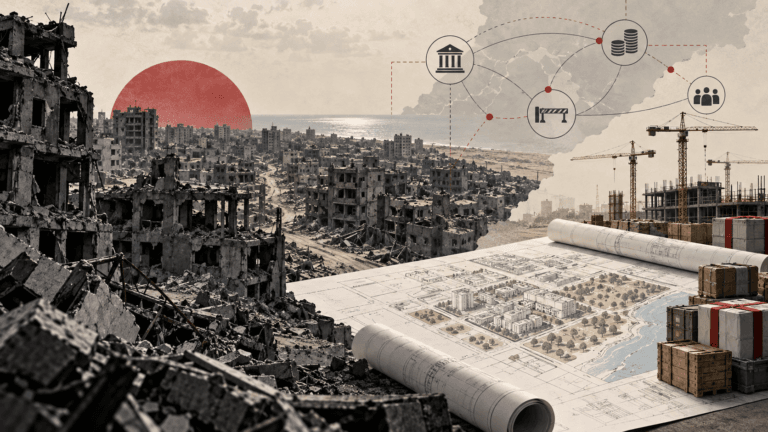
On October 27, the IAEA’s director general said the agency had found no sign that Iran had repaired or rebuilt nuclear facilities damaged in the 2025 and 2026 strikes. That sounds like a reassuring update. It is also narrower than it first appears: the same inspectors still cannot verify what happened to Iran’s declared uranium stockpile.
1. What “no repair observed” means
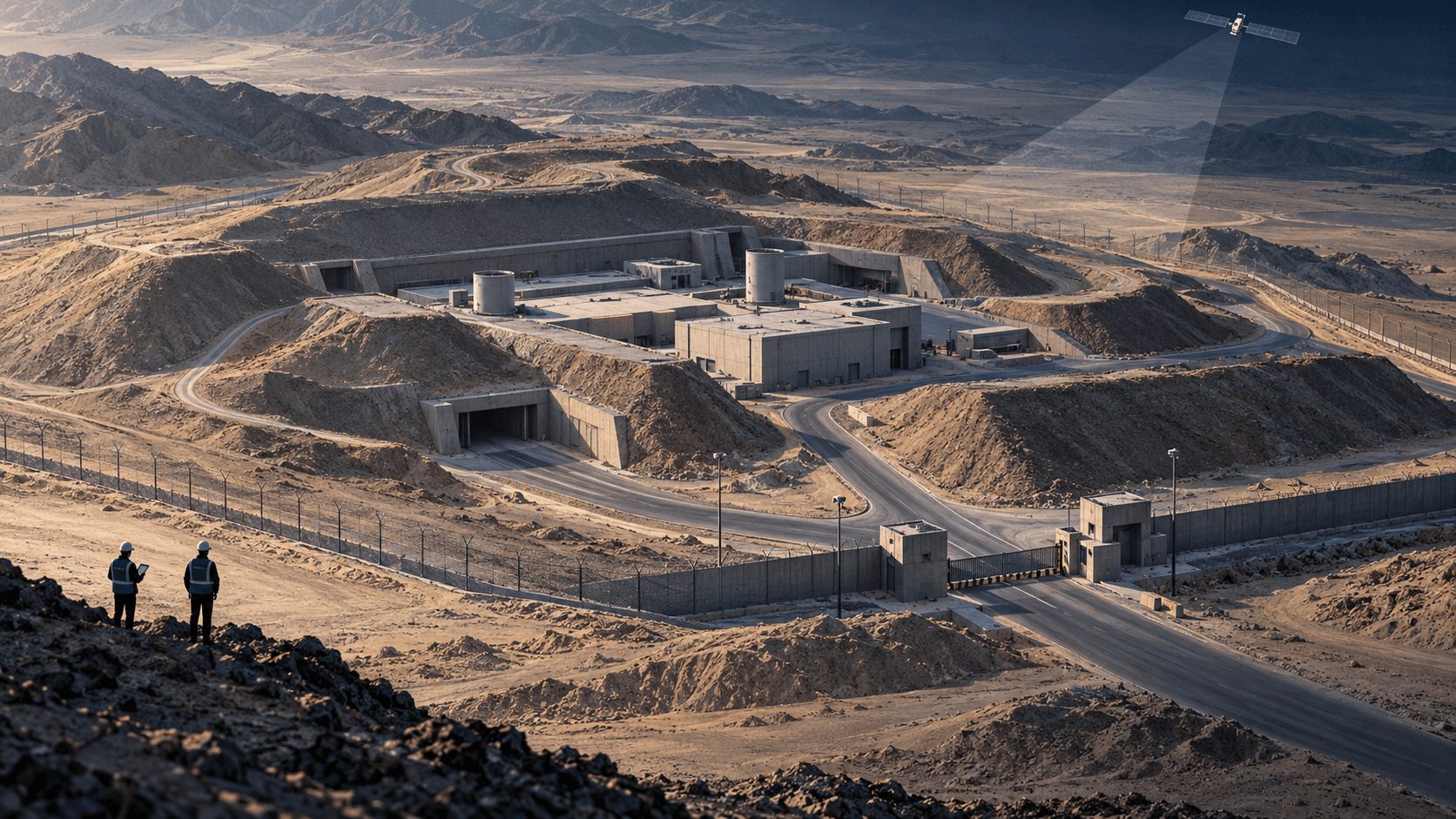
At the UN Security Council, Rafael Grossi said the IAEA had identified no repair or reconstruction activity at the damaged sites since June 2025. In the same briefing, he stressed that satellite imagery cannot replace access on the ground and urged Iran to provide the information and access needed to verify its nuclear material. The UN transcript of Grossi’s remarks makes both points clear.
The distinction matters. “No rebuilding detected” is a finding about visible activity at known facilities. It is not an inspection-based finding that Iran has no remaining enrichment capability, no nuclear material, or no activity elsewhere. The IAEA’s September 1 safeguards report says the agency cannot verify the status of affected facilities and associated material without access.
2. The inventory is the unresolved variable
The IAEA’s last estimate put Iran’s stockpile at 440.9 kilograms of uranium enriched up to 60 percent as of June 13, 2025. That is not a current inventory: it is a dated estimate carried forward because the agency has not been able to verify the material’s present location and status. The report also records Iran’s position that continued threats and the consequences of attacks made normal safeguards implementation “materially impracticable” and inconsistent with its security considerations.
The Associated Press, reporting on Grossi’s October 27 briefing, likewise notes both the absence of observed reconstruction and the IAEA’s inability to verify the stockpile. These are separate facts, not contradictory ones. There is no public evidence in these sources that the material was diverted; there is also no current inspection evidence that it remains where it was last accounted for.
3. The strategic contest is over verification and leverage
Three actors face different incentives. Tehran can view access as a security risk and a domestic political concession, especially while it says threats continue. Washington and its partners want inspections before treating the nuclear question as settled. The IAEA needs access to produce a technical answer rather than an inference from satellite images.
This is a commitment problem. Iran may fear that granting access will not produce sanctions relief or reduce the risk of further attacks. The United States may fear that easing pressure before inspections would surrender leverage without closing the information gap. Each side therefore has an incentive to wait for the other to move first.
A workable sequence could make steps reciprocal and observable: initial access to agreed sites and records; IAEA verification of declared material; then staged, reversible sanctions or security measures tied to published verification milestones. That is an analytical proposal, not a reported deal. Its value would depend on whether both sides can make their commitments credible and whether inspectors receive enough access to resolve—not merely postpone—the inventory question.
4. What the evidence does and does not support
- Confirmed: Grossi said the IAEA has not identified repair or reconstruction at the affected facilities since June 2025; the agency says it lacks access to verify the material and facilities.
- Inference: The strikes may have reduced visible activity at known sites, but public evidence here cannot establish the full effect on Iran’s nuclear capacity.
- Unknown: The present location, condition, and exact quantity of the previously declared uranium stockpile; whether activity is occurring beyond what the agency can observe.
The strongest counterargument is that the lack of reconstruction is meaningful evidence that the known facilities remain severely impaired, and that no current evidence proves diversion or weapons production. That is fair. But absence of evidence from a restricted inspection regime cannot answer the inventory question, either way. The opposite claim—that an unverified stockpile proves a bomb is being built—goes beyond the evidence just as surely.
Conclusion: replace dramatic certainty with a testable bargain
The new information is not that Iran’s nuclear risk has disappeared, nor that it has secretly surged. It is that the IAEA sees no rebuilding at damaged sites while remaining unable to verify the material most central to the dispute. A sound policy debate should hold both facts at once. The useful test is whether a negotiated inspection sequence can restore verifiable knowledge and attach reciprocal steps to it. Until then, “the facilities look quiet” is not the same as “the nuclear question is settled.”
Sources: UN Security Council transcript, IAEA Director General briefing, October 27, 2026; IAEA safeguards report GOV/2026/50, September 1, 2026; Associated Press, October 28, 2026; UK statement to the Security Council, October 27, 2026.
By the System Skeptic Speaks Editorial Desk. Updated October 29, 2026.
Method note: This analysis compares the IAEA’s primary reporting and Security Council remarks with independent AP coverage and the UK government’s stated position. It separates reported observations from interpretation. It has no independent access to classified intelligence or Iranian sites.