Australia and the Philippines signed a new Defence Cooperation Arrangement in Manila on November 15. Headlines have called it a “defence pact,” a phrase that can imply a promise to fight for one another. The public record supports a more specific, less dramatic description: the two governments say they want to make existing cooperation easier to plan and repeat, while expanding maritime awareness, information-sharing, training and infrastructure work. That may matter strategically even without a mutual-defence guarantee. It may also make a tense maritime environment harder to manage.
1. What the governments say they signed
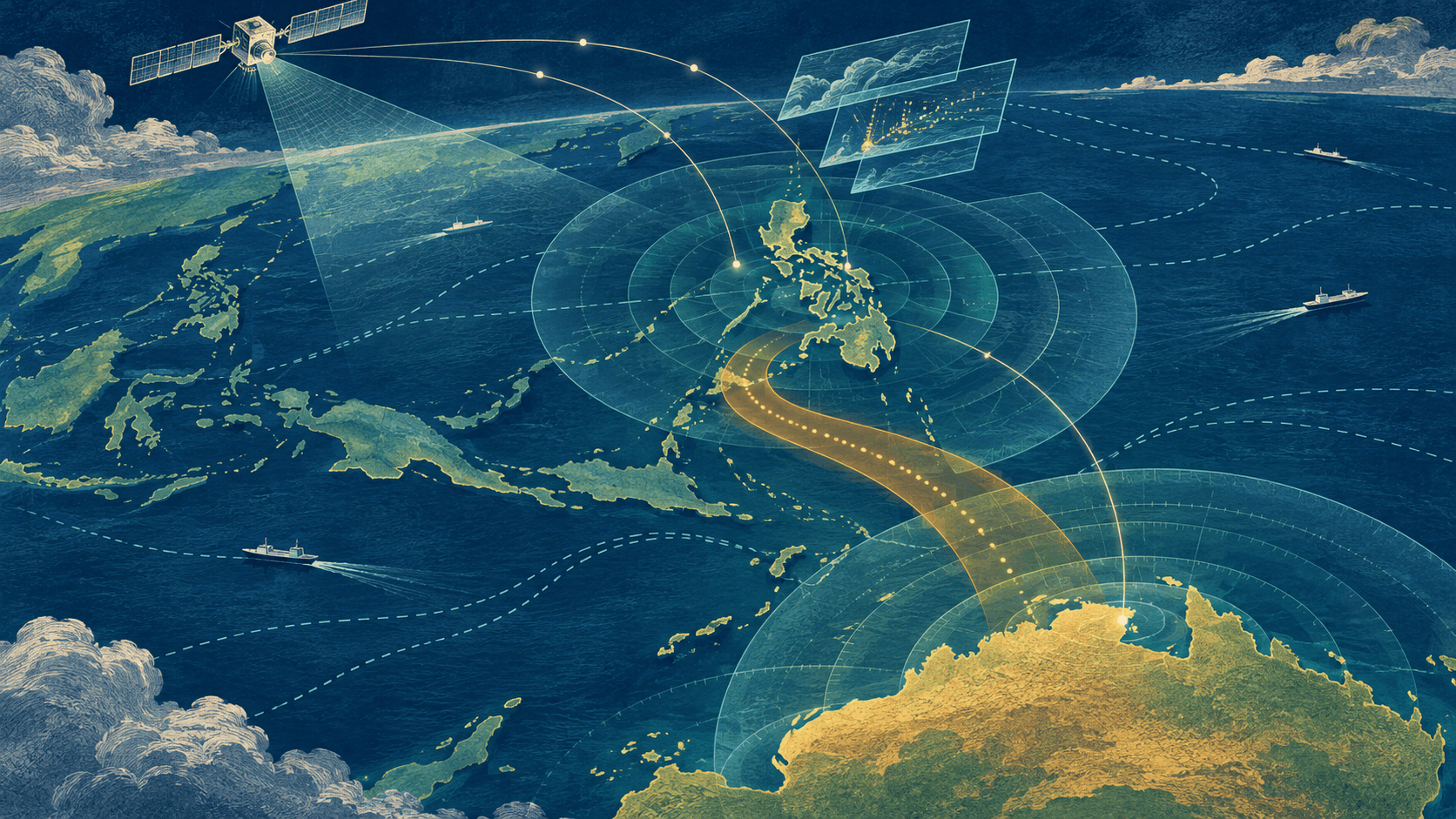
Australia’s joint statement, issued by Prime Minister Anthony Albanese, Deputy Prime Minister Richard Marles and Foreign Minister Penny Wong, confirms that Albanese witnessed the signing in Manila on November 15. It describes the Defence Cooperation Arrangement, or DCA, as a contemporary framework building on an existing memorandum of understanding. The listed priorities include maritime awareness and activities, information-sharing, strategic dialogue, planning, training, interoperability and defence infrastructure. A separate Australian announcement promises additional investment in Southeast Asia maritime partnerships, including aerial and surface drones, secure communications support, operator training and better detection of maritime and cyber threats. The release speaks of regional partners generally; it does not say that every item will be provided specifically to the Philippines under the bilateral DCA.
The statement does not describe a mutual-defence clause, an automatic response to an attack, or a new basing agreement. The full text of the DCA was not available in the government sources reviewed for this article. That absence matters in both directions: we cannot claim that the unseen document contains no legal commitments, but we also cannot responsibly call it a new treaty guarantee. The public announcement is about a cooperation framework and practical priorities. The legal scope beyond those statements remains unverified.
News coverage has alternated among “arrangement,” “agreement” and “pact.” Those words are not reliable substitutes for the text of an instrument. Political agreements can be meaningful without being mutual-defence treaties; conversely, a document with a modest title can create specific obligations. Until the complete text is published, the safest conclusion is narrow: Canberra and Manila have announced a new framework intended to deepen and facilitate defence cooperation.
2. The practical change may outweigh the label
Philippine Defence Secretary Gilberto Teodoro told reporters that the arrangement would streamline implementation of the Status of Visiting Forces Agreement, or SOVFA, which has been in force since 2012. He described the change as taking a process from “100 steps” to 10. That number is a minister’s characterization, not an independently measured audit of administrative procedure. Still, it identifies the concrete political objective: fewer obstacles to joint activity and more predictable coordination.
The SOVFA already provides a legal framework for visits by each country’s forces. Australia’s country brief lists it alongside a 1995 defence-cooperation memorandum and other bilateral mechanisms. The DCA therefore appears to build on an existing architecture rather than create the basic right for forces to visit each other’s territory. That distinction is analytically important. Creating access would be a substantial change in legal permission; reducing the friction in exercising existing access can be a substantial change in operational tempo without changing the underlying permission.
Administrative steps can shape military readiness. More frequent exercises help units learn each other’s communications systems, logistics and operating procedures. Better maritime data can shorten the time between detecting an incident and deciding how to respond. Infrastructure can make it easier to refuel, maintain equipment or host training. Yet the public releases do not disclose a schedule, a list of sites, a budget line for the bilateral arrangement, the amount of equipment reserved for either country, or a measured reduction in approval times. The distinction between capacity promised and capacity delivered should stay visible.
3. A strategic signal without an explicit promise to fight
Canberra presents the agreement as a contribution to regional security, resilience and the safety of busy shipping routes. Albanese said it was not aimed at any one country. When a journalist characterized it as directed at China, he rejected that framing and said the purpose was peace, security, sovereignty and freedom of navigation. This official position deserves to be reported accurately.
But the regional context is not abstract. China and the Philippines have been involved in repeated confrontations over maritime claims in the South China Sea. Teodoro explicitly said the agreement would support the Philippines’ “credible deterrence posture” in areas under its jurisdiction. Reporting by Reuters and CNA likewise connected the arrangement to the contested waterway. The public descriptions therefore contain two truths that are sometimes flattened into a false choice: Australia says the framework is not aimed at a particular country, while the Philippines expects it to strengthen its ability to resist coercion in a specific maritime environment in which China is a major actor.
That is the agreement’s signaling function. Australia shows that it is investing in procedures, training and information links with a partner near the points of friction. The Philippines signals that it is diversifying its security relationships rather than relying on a single ally. A signal does not have to be a promise of war to affect another government’s calculations. Its force depends on what is repeated: exercises, shared information, operational planning and decisions made during a crisis. A signed title is cheap; sustained activity and political risk are costlier signals.
4. A game-theory view: make cooperation credible, preserve discretion
The arrangement can be understood as an attempt to change a repeated game. Two governments may both prefer cooperation but still do less than they intend because each activity requires approvals, coordination and confidence that the other side will show up. These transaction costs can create a gap between public promises and actual practice. A common framework can lower those costs and make cooperation more likely to recur.
Repeated interaction can also reduce uncertainty. In an information problem, a partner may say it will help but the other government cannot know whether that commitment will survive political pressure. Exercises and routine planning create evidence about capabilities and willingness to cooperate. They do not create the same assurance as a ratified mutual-defence treaty, which can impose a much higher political cost for withdrawal. The DCA may therefore make ordinary cooperation more credible while leaving wartime assistance uncertain.
The gains and risks are asymmetric. Manila can gain better maritime awareness, training and a wider network of partners. Canberra can strengthen its regional presence and help protect sea lanes on which its trade depends. But Philippine forces are closer to points of friction, while Australia must balance alliance solidarity with economic relations and escalation risks involving China. In a crisis, the two capitals may assign different values to the same action. If public expectations exceed the actual commitment, disappointment can become dangerous precisely when clear signaling matters most.
This is why strategic ambiguity has a double edge. It can make an adversary uncertain about the scale of a response, which may deter probing. It can also encourage a test if the adversary believes no response is guaranteed. The DCA’s practical value will depend on whether the governments quietly create reliable consultation and response routines, and whether they communicate the boundaries of their cooperation clearly enough to avoid a credibility trap.
5. The security dilemma: defensive tools can look offensive
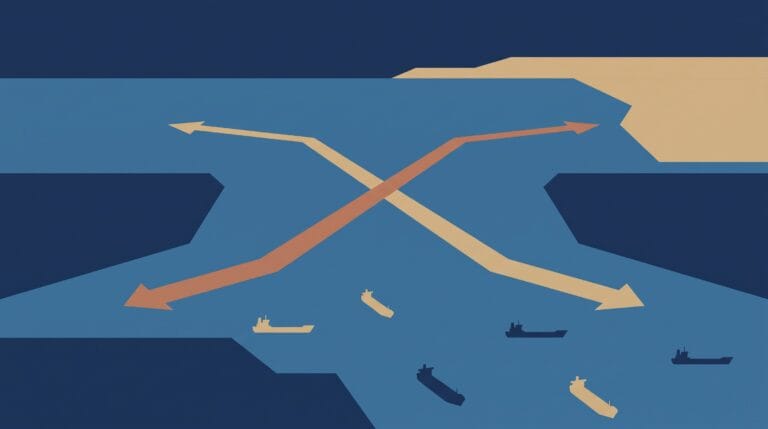
In a security dilemma, one state’s defensive measure can appear threatening to another. Maritime surveillance, shared data and joint exercises can help prevent accidents, document coercion and protect vessels. The same tools can improve the ability to track a competitor, coordinate military responses or restrict its operational freedom. Declaring a capability defensive does not make it politically invisible to other governments.
Game theory does not predict an arms race. It clarifies the incentives that could produce one. If Beijing sees risk-reduction and lawful coordination, coexistence remains possible. If it sees a coalition constraining Chinese activity, it may test the partners at sea. Manila, fearing that restraint looks weak, may answer with more patrols. Each side can describe its own move as defensive and the other’s as hostile.
A different equilibrium is possible: credible capability combined with guardrails. Advance notice for major exercises, operational hotlines, shared procedures for collisions, public emphasis on search and rescue, and continued diplomatic channels with China could reduce the risk of misreading. These steps do not require either side to abandon its legal position. They reduce the chance that a local incident is mistaken for the start of a broader operation.
6. International law matters, but it cannot substitute for power
Both governments invoke international law and maritime security. The 2016 arbitration in Philippines v. China addressed historic rights, the status of maritime features and the lawfulness of specified actions under the UN Convention on the Law of the Sea. The Permanent Court of Arbitration’s case record notes that China did not participate and rejected the tribunal’s jurisdiction. Beijing has rejected the award. These facts explain why Manila combines legal arguments with capabilities that can document and respond to events at sea.
The award did not settle sovereignty over every island or all maritime boundaries. Better awareness can document events, but neither a legal finding nor a partnership guarantees enforcement.
Interoperability can raise the expected cost of coercion. But if leaders never specify what triggers a joint response, ambiguity may deter or invite probing. They must build capacity without letting cooperation be mistaken for a guarantee.
7. The serious counterargument: this may be useful, routine cooperation
Canberra says the DCA supports ASEAN and shared maritime challenges. Better communications can aid rescue, fisheries protection, disaster response and cyber resilience. With the SOVFA already in force for more than a decade, this may be incremental cooperation rather than a new alliance.
Calling it solely an anti-China pact overstates the evidence: Canberra cited trade routes, while Teodoro cited disaster response and deterrence. Civilian uses do not erase the military value of information-sharing in a contested sea.
Delivery is uncertain. A signed framework can signal intent without funding infrastructure or capabilities. Budgets, staff, exercises and systems will show whether it changes the regional balance. If it remains mostly administrative, that may still reduce friction, but its deterrent effect will be limited.
8. What remains unknown
The full DCA text, its governance arrangements, confidentiality rules, implementation schedule and exact relationship to the SOVFA are not available in the public documents reviewed. The announcements do not name specific infrastructure sites, identify which country will operate them, quantify bilateral spending or specify which systems will actually be transferred. Teodoro’s “100 to 10” description has not been accompanied by an independent procedural audit.
No crisis has yet tested whether the DCA changes either government’s behavior. Its effects must be distinguished from cooperation with the United States and Japan. The sources reviewed include no specific Chinese response; predictions about Beijing remain forecasts.
These gaps do not make the announcement unimportant; they define the limits of a defensible interpretation. This article evaluates the disclosed policy signal and expected capabilities, not an unpublished instrument or classified planning.
9. What to watch next
Watch for budgets and infrastructure, the frequency of exercises, and procedures for sharing information during a crisis. Search-and-rescue work, disaster exercises and collision-prevention rules would show broader public benefits. More military activity without deconfliction could instead deepen mistrust. The outcome will depend on capability, intent and how others interpret both.
10. Conclusion: the real commitment is repetition
The November 15 signing is a strategic signal and a framework for action, but the evidence available today does not establish a mutual-defence guarantee. Its clearest practical purpose is to make planning, maritime activity, information-sharing and training easier, using a bilateral architecture that already includes a visiting-forces agreement. That can strengthen Philippine deterrence and make Australia’s engagement more visible without requiring both governments to promise the same response to every crisis.
The useful questions are not only “Whom is this aimed at?” or “Is this a new treaty?” They are: which repeated actions will the arrangement enable, how will other actors interpret them, and where do the two governments draw the limits of their commitment? In game-theory terms, new capabilities and signals change expected payoffs; they do not dictate the equilibrium. Credible cooperation can discourage coercion. Poorly calibrated cooperation—or presenting it publicly as an absolute guarantee—can create expectations its signatories may not be prepared to meet.
Much of the coverage highlights a stronger alignment against China. That captures a real dimension: Manila explicitly connects the arrangement to deterrence, and maritime disputes are central to the context. But the shorthand can obscure two equally important facts. Canberra describes the framework as regional and not aimed at one country, and the two countries already had legal mechanisms for military visits. The decisive test will be implementation and crisis management, not the label attached to the signing ceremony.
Verified facts and limits
- The Australian and Philippine governments announced the DCA’s signing in Manila on November 15, 2026; Australia’s official release and Albanese’s full press-conference transcript confirm the date and broad cooperation areas.
- Teodoro says it will streamline the 2012 SOVFA and reduce procedural steps from 100 to 10; this is an attributed ministerial statement, not an independent audit.
- The DCA’s complete text was not available in the government sources reviewed at publication. This article therefore does not claim to know its unpublished legal clauses.
- Australian officials say the arrangement is not aimed at one country; the Philippine defence minister links it to credible maritime deterrence. These are governments’ stated positions, not evidence of China’s intentions.
Sources
- Australian joint media release, November 15, 2026: announced areas of cooperation and regional maritime investment.
- Anthony Albanese’s full Manila press-conference transcript: signing announcement, stated purpose and comments on China.
- Reuters, republished by Philstar/Interaksyon, November 15, 2026: Teodoro’s explanation, SOVFA procedures and deterrence.
- CNA/AFP, November 15, 2026: operational history and regional context.
- United Nations Treaty Collection: Australia–Philippines SOVFA, in force since 2012.
- Permanent Court of Arbitration: Philippines v. China, South China Sea case record, for the legal background.
Method note
Updated November 16, 2026. By the System Skeptic Speaks Editorial Desk. This analysis uses government releases, a full press-conference transcript and distinct news reports. Announced facts are separated from strategic inferences. Because the complete text of the new arrangement was not publicly verifiable here, conclusions about its legal scope are limited. The cover is an AI-generated illustration, not documentary photography.
Version française : Accord de défense Australie–Philippines : ce qui change quand la coopération s’accélère